

SEO content optimization tips for featured snippets focus on structuring content with clear question-based headings, concise 40–60 word answers, scannable formatting (lists or tables), and intent-driven keyword alignment to increase eligibility for position zero.
SEO content optimization is no longer just about rankings, it’s about visibility at the very top of search results. A well-structured featured snippet can place your content in position zero, increasing authority, impressions, and user trust before competitors are even seen.
If you want to optimize for featured snippets, your content must be structured for extraction, not just readability. That means understanding ideal featured snippet length, formatting answers clearly, and building a deliberate snippet strategy aligned with search intent.
Because if Google is choosing one concise answer to display above everyone else, why shouldn’t it be yours?
Why Featured Snippets Matter in SEO Optimization

In modern search engine optimization, featured snippets have become a critical component of seo content optimization. A featured snippet is a special search result that appears at the top of Google’s organic listings, often referred to as position zero, because it provides a concise answer directly in the search results.
The importance of snippet visibility in SEO is significant. Securing a featured snippet increases brand exposure, improves authority perception, and can boost click-through rates. Even when users do not click, appearing in position zero strengthens brand trust and reinforces topical authority.
While some queries may be fully answered within the snippet itself, reducing clicks in certain cases, the overall visibility benefit makes snippet optimization a powerful long-term SEO strategy.
Types of Featured Snippets You Can Optimize Content For
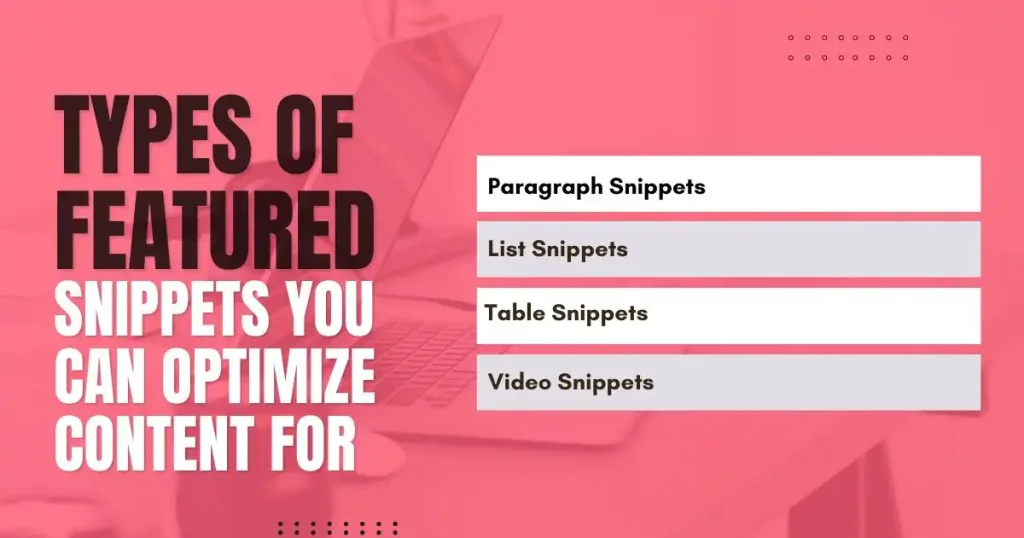
Understanding snippet formats is important when building your snippet strategy.
Paragraph Snippets
Paragraph snippets are short definition-style answers, typically 40–60 words. They directly answer informational queries such as “what is” or “why does.” Optimizing for these requires clarity, precision, and correct featured snippet length.
List Snippets
List snippets appear as numbered or bulleted steps. These commonly rank for “how to” queries. Structuring content into clean, ordered steps increases your chances when learning how to optimize for featured snippets.
Table Snippets
Table snippets display structured data such as comparisons, pricing, or feature breakdowns. Clean HTML tables with minimal columns are more likely to be extracted.
Video Snippets
For instructional queries, Google may feature timestamped videos directly in the search results. These video snippets highlight specific sections that answer a user’s question quickly and clearly.
Using descriptive titles, keyword-aligned headings, and well-written video descriptions improves eligibility. Adding accurate timestamps and structured chapters also helps search engines understand and extract the most relevant segment of your content.
Find Featured Snippet Opportunities
Effective seo content optimization begins with research, not rewriting.
Identify Snippet-Triggering Queries
Look for question-based and long-tail keywords that already generate featured snippets in the SERPs. Queries beginning with “what,” “how,” “why,” and “best” are strong candidates.
Analyze Existing Snippet Owners
Study the page currently holding the featured snippet. Evaluate:
- Answer length
- Formatting style
- Heading structure
- Use of lists or tables
This competitive analysis informs your snippet optimization approach.
Match Search Intent to Snippet Format
If the current snippet is a paragraph, structure yours similarly. If it’s a list, use numbered steps. Aligning content structure with Google’s preferred format improves success probability.
SEO Content Optimization Checklist to Win Featured Snippets
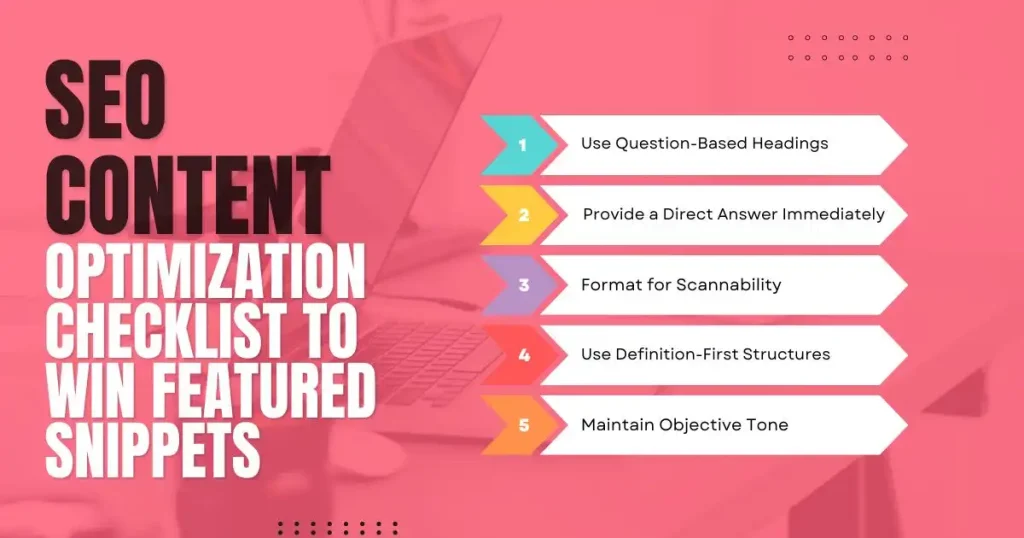
If you want to optimize for featured snippets, follow this structured approach:
Use Question-Based Headings
Create H2 or H3 headings that mirror search queries. This signals to Google exactly what the section answers.
Provide a Direct Answer Immediately
Place a concise 40–60 word answer directly under the heading. This ideal featured snippet length makes extraction easier.
Format for Scannability
Use:
- Bullet points
- Numbered steps
- Short paragraphs
- Clear tables
Readable formatting improves both UX and snippet eligibility.
Use Definition-First Structures
Start with clear phrasing such as: “SEO content optimization is…”
This direct pattern increases the likelihood of being pulled into a featured snippet.
Maintain Objective Tone
Maintain an objective, informational tone when structuring answers for snippet optimization. Avoid promotional claims, exaggerated language, or sales-driven messaging, as Google typically selects clear, neutral, and fact-based explanations for featured snippet placement.
Focus on delivering concise, authoritative answers that directly address the query without persuasion or branding bias.
Optimize by Snippet Format
Below are practical templates you can use in your snippet strategy.
Paragraph Snippet Template
SEO content optimization is the process of structuring and refining website content to improve search visibility and answer user intent clearly. It focuses on relevance, clarity, and formatting to increase eligibility for featured snippets.
List Snippet Template
How to optimize for featured snippets:
- Identify snippet-triggering keywords
- Structure content with question headings
- Provide concise answers immediately
- Format using lists or tables
- Monitor and refine performance
Table Snippet Template
| Element | Purpose |
| Question Heading | Signals search intent |
| Short Answer | Ideal snippet length |
| Structured Formatting | Improves extraction |
| Clear Definitions | Enhances accuracy |
Strengthen Snippet Eligibility With Structured Data
Structured data such as FAQPage and HowTo schema enhances content clarity for search engines. While schema alone does not guarantee a featured snippet, it reinforces structure and supports overall snippet optimization.
Combining schema with strong formatting and clear answers creates a powerful seo content optimization framework.
Measure, Iterate, and Protect Your Featured Snippet Gains

Winning a featured snippet is not permanent. Continuous monitoring is essential.
- Track Snippet Performance – Use tools like Google Search Console or rank tracking platforms to identify snippet wins and losses. Monitor impression growth and keyword positioning shifts.
- Refresh and Improve Formatting – If you lose a snippet, compare formatting and answer clarity against the current winner. Small structural improvements can reclaim position zero.
- Refine Your Snippet Strategy Over Time – Effective snippet optimization is iterative. Focus on high-intent queries where visibility offers the greatest impact.
Own Position Zero or Stay Invisible
SEO content optimization is not a box to tick, it is your ticket to the front of the line. In today’s search results, second place is the first loser. If you are not structuring content for extraction, you are leaving easy wins on the table. Clear answers, sharp formatting, and a focused snippet strategy separate leaders from noise.
Don’t bury your best insights under fluff. Put your strongest answer first and make Google’s job simple. The early bird gets the worm, but only if it shows up prepared. So ask yourself: are you writing to rank, or writing to win?