

Internal linking improves SEO and crawl efficiency by helping search engines discover pages faster, understand content relationships, and prioritise important URLs across your website.
Many websites publish high-quality content yet struggle to rank or get fully indexed because search engines can’t efficiently interpret how their pages connect.
Without a clear internal linking structure to guide crawlers and distribute ranking signals, how can search engines consistently identify and prioritise the content that matters most?
Understanding Internal Linking in SEO
Internal linking defines how pages within your site are connected and how both users and search engines move between them.
An internal link is a hyperlink that points from one page on your website to another page on the same domain, helping search engines discover new pages and understand how content is related.
Internal links strengthen your own site’s structure and authority flow, while external links point to other domains and serve a different purpose in linking SEO.
Why Internal Linking Matters for SEO
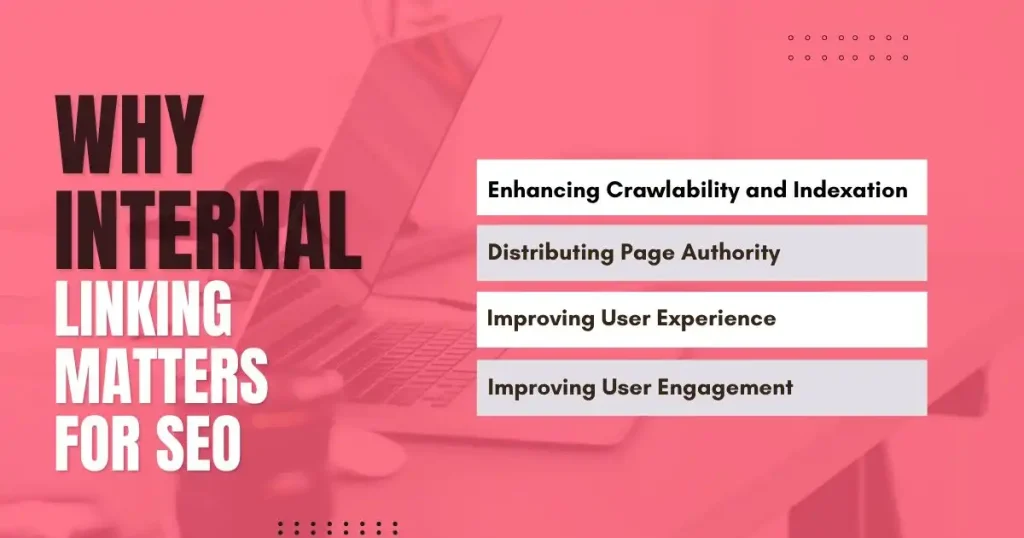
The importance of internal linking lies in its direct impact on crawlability, authority distribution, and content relevance.
Enhancing Crawlability and Indexation
Internal linking creates crawl paths that allow search engine bots to find, access, and index pages that might otherwise remain hidden.
Distributing Page Authority
Internal links pass ranking signals from stronger pages to supporting pages, helping search engines understand which content is most important.
Improving User Experience and Engagement
Clear internal linking helps users navigate related topics easily, increasing time on site and encouraging deeper content exploration.
How Internal Linking Improves Crawl Efficiency
Internal linking directly influences how efficiently search engines use their crawl budget on your site.
Reducing Crawl Depth and Crawl Budget Waste
By linking important pages closer to the homepage, internal linking reduces crawl depth and ensures search engines reach priority content faster.
Ensuring All Pages Are Accessible and Indexed
A consistent internal linking structure prevents orphan pages by ensuring every important page is linked from at least one other page.
Optimizing Link Pathways
Logical internal links guide crawlers through your site in a structured way, improving how pages are discovered and processed.
Types and Placement of Internal Links That Boost SEO
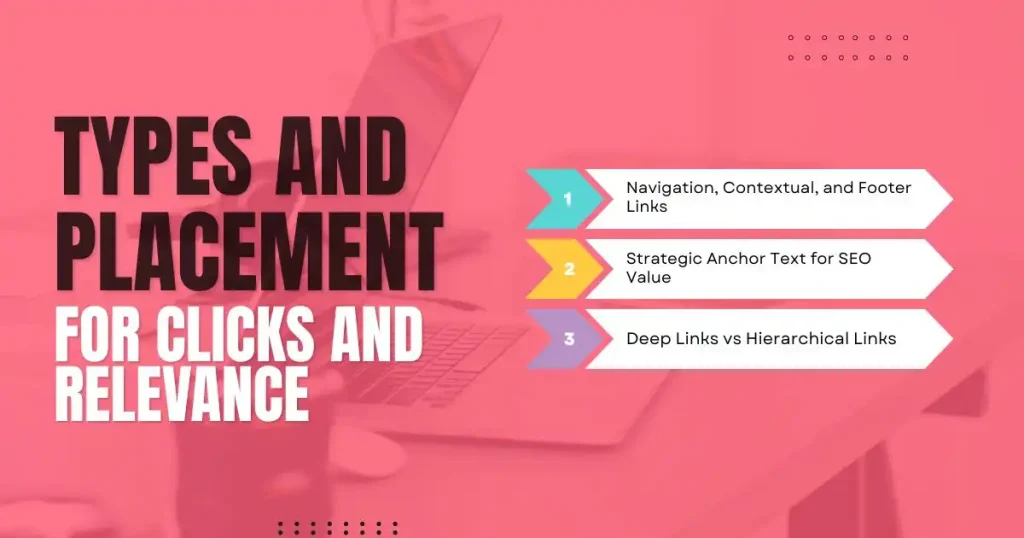
Different internal link types serve specific roles in site navigation and SEO performance.
Navigation, Contextual, and Footer Links
Navigation links establish site hierarchy, contextual links reinforce topical relevance within content, and footer links provide secondary access points.
Strategic Anchor Text for SEO Value
Descriptive anchor text helps search engines understand the topic of the linked page, strengthening internal linking SEO signals.
Deep Links vs Hierarchical Links
Deep links connect high-level pages to specific content, while hierarchical links reinforce the overall site structure and content flow.
Building an Effective Internal Linking Strategy
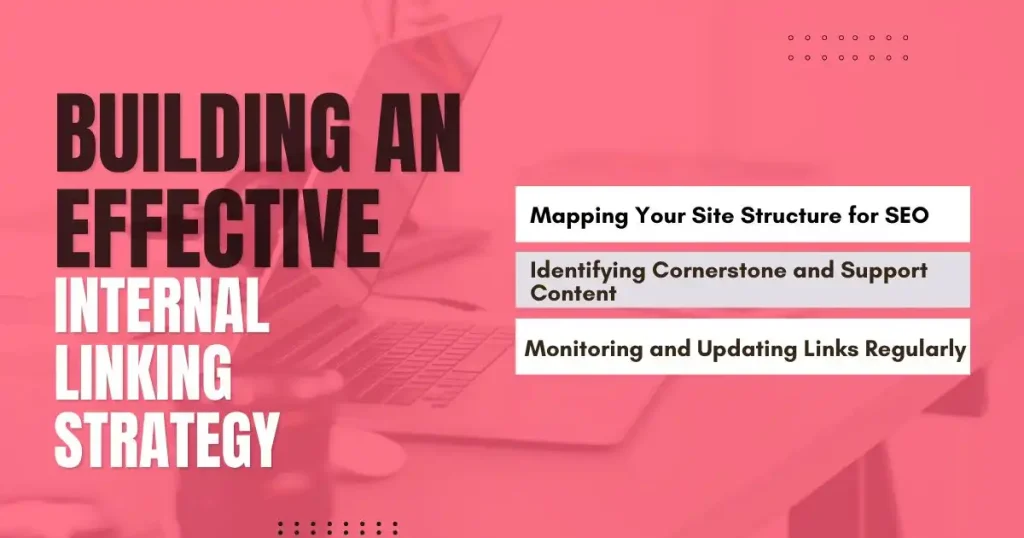
A deliberate internal linking strategy ensures links support SEO goals rather than being added randomly.
Mapping Your Site Structure for SEO
Planning your internal linking structure helps define clear relationships between pages and ensures authority flows to priority content.
Identifying Cornerstone and Support Content
Cornerstone pages act as central hubs, while supporting pages link back to them to reinforce topic authority.
Monitoring and Updating Links Regularly
Regular internal link reviews help maintain relevance, fix broken links, and incorporate new content into existing link pathways.
Measuring the Impact of Internal Linking on SEO
Measuring performance confirms whether your internal linking strategy is improving crawl efficiency and visibility.
Tracking Crawl Metrics and Index Coverage
Crawl frequency and index status reveal how effectively search engines are accessing and prioritising your pages.
Engagement and Ranking Indicators
Improved rankings, pages per session, and organic visibility often indicate successful internal linking SEO.
Common Internal Linking Mistakes to Avoid
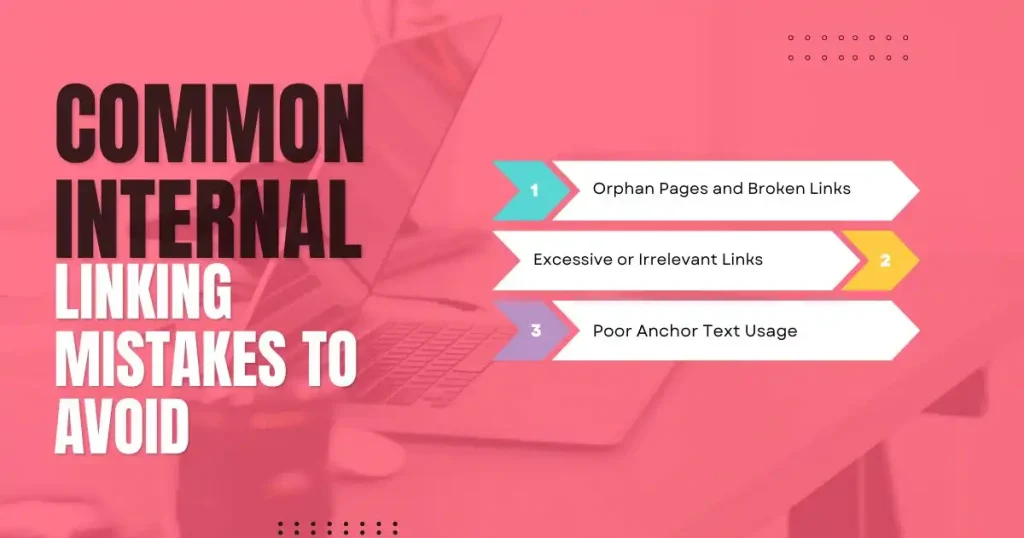
Avoiding common errors helps preserve link equity and maintain a clean internal linking structure.
- Orphan Pages and Broken Links – Pages without internal links or with broken paths are harder to crawl and may fail to rank.
- Excessive or Irrelevant Links – Too many internal links on a page dilute authority and reduce clarity for users and search engines.
- Poor Anchor Text Usage – Generic anchor text weakens context and limits the SEO value of internal links.
Stop Letting Your Best Pages Get Lost
Internal linking is not just an SEO tactic, it’s the roadmap that tells search engines where to go and what matters. Without it, even great content can slip through the cracks, unseen and undervalued. Think of your website like a city: if the roads are broken or missing, no one reaches the destination.
A strong internal linking structure connects the dots, passes authority, and keeps both users and crawlers on track. Fixing internal links is low effort but high impact, so why leave rankings on the table when a few smart connections can change the game?