

There’s no fixed number for how many internal links per page SEO requires, but a common guideline is about 1 relevant internal link per 200–300 words. Focus on relevance and user experience rather than a specific link count.
If you’ve ever asked yourself how many internal links per page SEO experts recommend and whether internal linking truly impacts your rankings.
Many websites publish high-quality content but still struggle to rank because their internal links are either too few, too many, or poorly structured.
Without a clear internal linking SEO strategy, search engines may fail to understand which pages matter most or how your content connects across the site. And if search engines can’t clearly interpret your structure and priorities, how can they confidently rank your pages above the competition?
Optimal Number of Internal Links per Page SEO
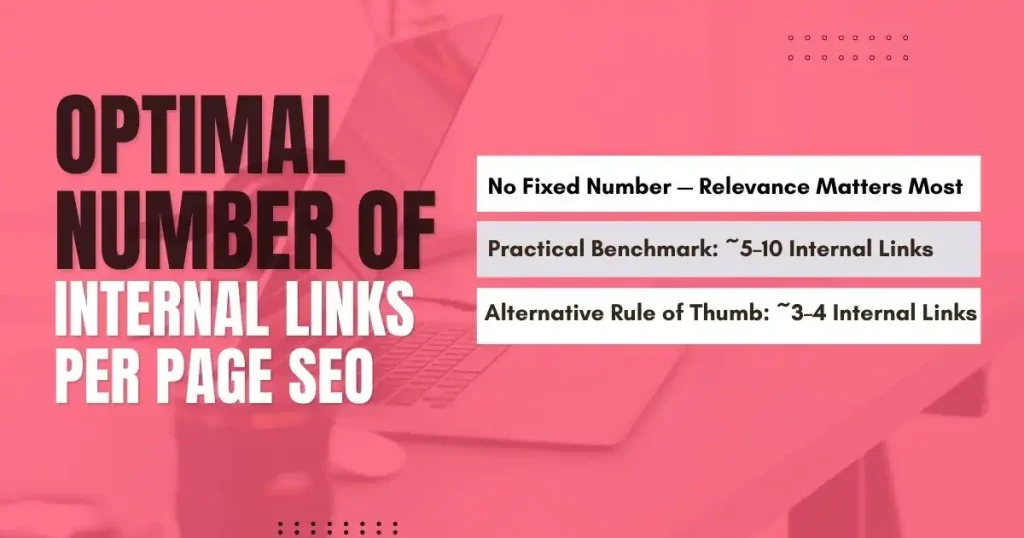
There is no exact “perfect number” of internal links that will magically boost rankings, but there are smart benchmarks and rules of thumb you can use.
No Fixed Number — Relevance Matters Most
In internal linking SEO, quality always beats quantity. Simply stuffing dozens of internal links into every page won’t help if they’re irrelevant to the reader or your site structure. What matters most is linking to pages that are strategically important and useful.
Practical Benchmark: ~5–10 Internal Links
A reasonable guideline from industry research suggests roughly 5–10 internal links per page on longer content pages. That often translates to about 1 internal link per 200–300 words, though that’s not a strict rule.
Alternative Rule of Thumb: ~3–4 Internal Links
Some SEO practitioners recommend a more conservative approach like 3–4 internal links per page especially if your content is shorter or very targeted.
The bottom line: how many internal links per page SEO varies by context. Think about relevance, user journey, and sitemap structure first.
What Counts as an Internal Link?
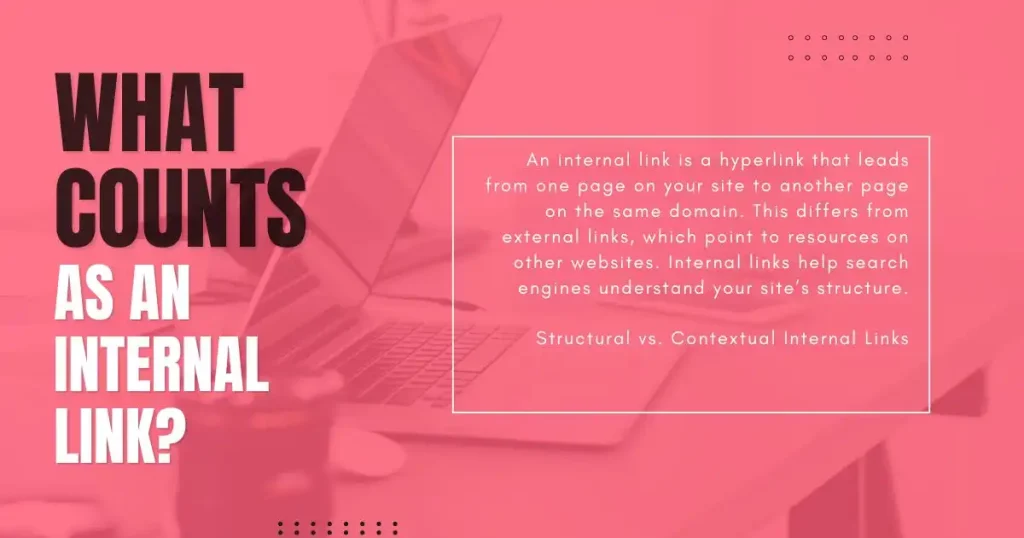
Before determining how many internal links per page SEO should include, it’s important to understand what is internal link.
An internal link is a hyperlink that leads from one page on your site to another page on the same domain. This differs from external links, which point to resources on other websites. Internal links help search engines understand your site’s structure.
Structural vs. Contextual Internal Links
- Structural internal links: navigation elements like menus or breadcrumbs.
- Contextual internal links: links within your content that help users jump to related pages.
Both types contribute to internal linking SEO, but contextual links typically carry more meaningful SEO value.
Why Internal Links Matter for SEO
Understanding the importance of internal linking is crucial before determining how many internal links per page SEO should use.
Distribute Authority and Reinforce Page Importance
Internal links pass link equity (or authority) from strong pages (like your homepage or popular posts) to other pages that might need a boost.
Support Crawling and Indexation
Search engine crawlers follow internal links to discover new pages. A logical internal linking structure ensures your entire site is indexable.
Improve User Experience
Good internal links help visitors navigate logically through your content, increasing time on site and reducing bounce rates, behaviors that indirectly support SEO.
How Many Internal Links per Page SEO Depends On These Factors
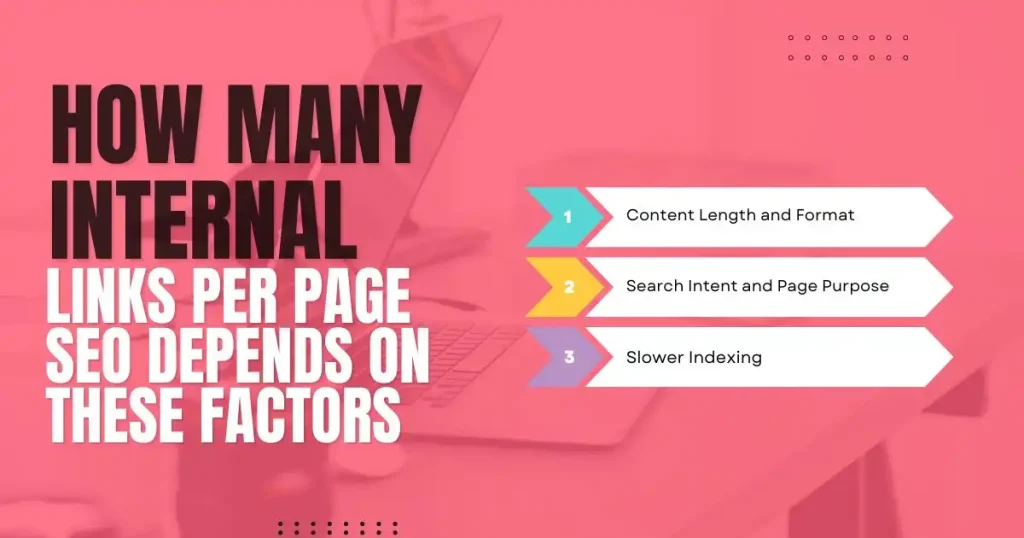
There’s no one-size-fits-all number because internal linking depends on the context of your content and site.
Content Length and Format
Longer posts naturally accommodate more internal links, while short articles may need fewer. The key is relevance over arbitrary counts.
Search Intent and Page Purpose
Informational content often benefits from more internal links (to definitions, related topics, guides). Transactional pages (like product pages) may use fewer to avoid distraction.
Site Structure and Architecture
Large sites with many related pages often need more internal linking to help crawlers and users navigate the breadth of content effectively.
How Many Internal Links per Page SEO by Content Length
Here’s how to approach how many internal links per page SEO based on your content type:
- Minimum “Baseline” Internal Links – Every content page should include at least a few internal links to important related content — even if it’s just 2–3 useful recommendations.
- Scaling Links With Word Count – Aim to add additional internal links as your content grows longer, but don’t force them. Only add links that genuinely help the reader.
- When to Increase Internal Links – Category guides, pillar pages, and hub posts usually deserve more internal links to related subtopics.
Can Too Many Internal Links Hurt SEO?
Yes, though it’s more about context than strict link counts.
“Link Stuffing” Can Dilute Value
If you have an excessive number of internal links with nothing but SEO motive, they lose value. Search engines may begin to ignore or de-prioritize them.
User Experience Threshold
Very high link counts (like hundreds of internal links) can overwhelm users and dilute relevance hurting both UX and SEO.
Best Practices for Internal Links That Actually Help Rankings
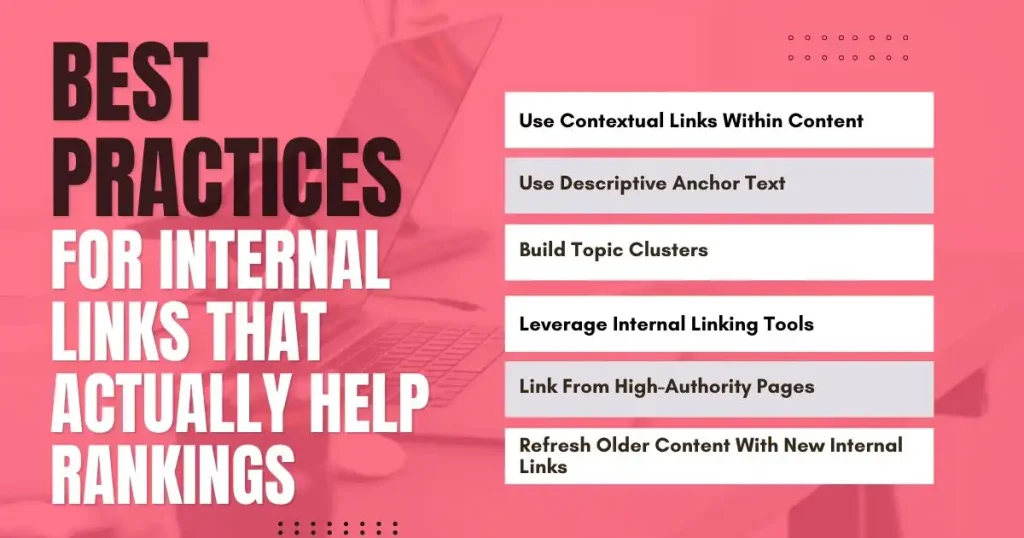
To make internal linking SEO work:
- Use Contextual Links Within Content – Internal links should appear where they provide value in helping readers understand or explore a topic.
- Use Descriptive Anchor Text – Anchor text should clearly describe what the linked page is about — both for users and search engines.
- Build Topic Clusters – Connect related content in thematic clusters to reinforce topic authority.
- Leverage Internal Linking Tools – Internal linking tools help identify opportunities and gaps, making execution more efficient.
- Link From High-Authority Pages – Pages that already attract traffic and backlinks are excellent starting points for spreading authority via internal links.
- Refresh Older Content With New Internal Links – Updating existing pages with new internal links can drive traffic to newer content.
Internal Linking Structure That Makes Easier to Decide
A strong internal structure simplifies decisions about how many internal links per page SEO should include.
Website Hierarchy Helps
Organize links in a pyramid structure: homepage → category pages → topic pages → specific posts.
Cornerstone / Key Pages Deserve More Links
Pillar content and cornerstone pages often require more internal links to signal importance and relevance.
How to Audit and Maintain Internal Links Over Time
Internal linking SEO isn’t a “set and forget” task, it requires consistent monitoring and strategic refinement as your website grows. Regularly run internal link audits using an internal linking tool to assess link distribution, identify orphan pages, and uncover new contextual linking opportunities between related content.
This helps ensure important pages are receiving sufficient internal links and that authority is flowing logically across your site.
Pages with no internal links, often called orphan pages,are difficult for search engines to discover and cannot effectively receive or distribute internal link equity.
Over time, this can weaken your overall site structure and limit ranking potential. In addition to fixing orphan pages, review anchor text relevance, remove outdated or broken internal links, and update older high-traffic content with links to newer strategic pages.
A well-maintained internal linking structure strengthens crawlability, reinforces topical relevance, and supports long-term SEO performance.
Stop Counting Links. Start Building Authority.
Internal linking is not a numbers game, it’s a strategy game. You can sprinkle 5, 10, or 20 links on a page, but if they don’t guide readers or signal importance, you’re just spinning your wheels. Smart internal linking SEO connects ideas with purpose, pushes authority where it matters, and turns scattered content into a clear roadmap.
Don’t let strong pages sit idle while weaker ones fight alone. Take the wheel, audit your structure, and link with intent. Because if your pages aren’t connected strategically, how can your rankings ever pull in the same direction?
If you’re looking to strengthen your internal linking strategy and improve rankings locally, partnering with an experienced SEO Philippines team can help you build a structure that drives real authority, not just more links.