

Cash flow management software improves planning by providing real-time visibility into cash inflows and outflows and automating cash flow forecasts. It enables businesses to anticipate shortfalls, test scenarios, and make informed budgeting and spending decisions with greater accuracy.
Effective financial planning requires clear visibility into where cash comes from, where it goes, and what lies ahead, something spreadsheets often struggle to provide.
By combining real-time data with automated forecasts, cash flow management software turns guesswork into informed decision-making, but can your business afford to plan without it?
What Is Cash Flow Management Software for Planning?
Cash flow management software is a digital tool designed to track, analyse, and project cash inflows and outflows over time. Unlike static spreadsheets, this type of software continuously updates as new financial data becomes available, giving businesses an accurate picture of their current and future cash position.
When used correctly, cashflow software allows business owners and finance teams to plan ahead with confidence, ensuring there is enough cash available to meet obligations while supporting strategic goals.
Cash Flow Management vs. Cash Flow Forecasting
Cash flow management focuses on monitoring daily cash movements, while a cash flow forecast looks ahead by estimating future balances based on expected payments and expenses. The most effective planning happens when both functions are combined in a single platform.
Using cash flow planning software ensures that forecasts are updated automatically, reducing reliance on manual calculations and improving accuracy over time.
The Planning Problem It Solves
Many businesses struggle with limited visibility into future cash needs. Without reliable forecasting, it becomes difficult to plan expenses, manage growth, or respond to unexpected changes. Cash flow management software solves this by providing forward-looking insights that support smarter, more proactive planning.
How Cash Flow Management Software Improves Planning
Accurate planning depends on timely, reliable information. Cash flow management software improves accuracy by replacing assumptions with real financial data.
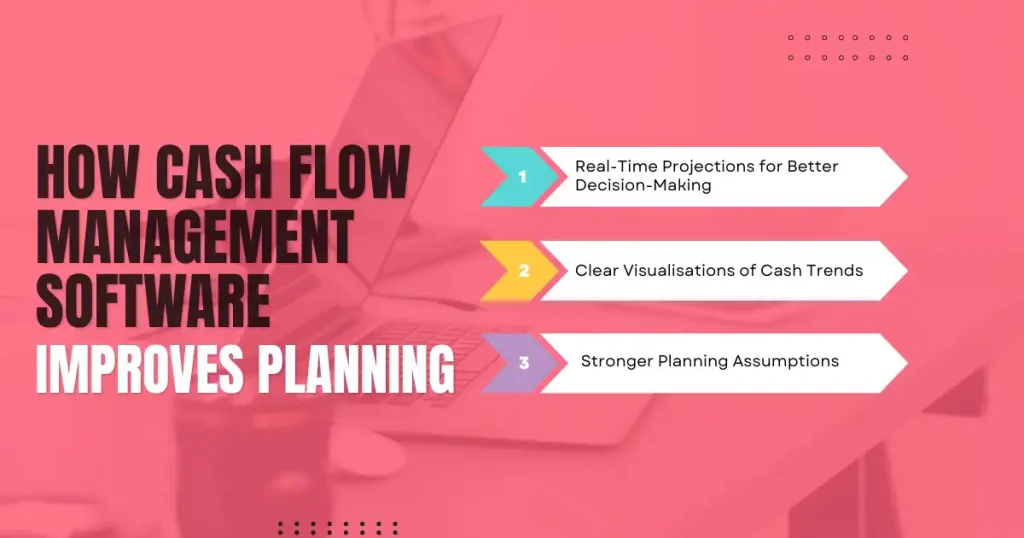
- Real-Time Projections for Better Decision-Making – By updating forecasts automatically, cash flow planning software allows businesses to see how their cash position may change over the coming weeks or months. This helps decision-makers adjust plans quickly when conditions change.
- Clear Visualisations of Cash Trends – Dashboards and charts make it easier to identify patterns, upcoming shortfalls, or surplus cash. These visual insights help businesses take action early, rather than reacting after issues arise.
- Stronger Planning Assumptions – Instead of relying on estimates, cashflow software uses real invoice and expense data to refine projections. This leads to more realistic planning and better alignment between expected and actual cash flow.
Core Features to Look For in Cash Flow Management Software
Not all cash flow tools offer the same value. When evaluating options, look for features that directly support planning and forecasting.
Accounting and Bank Integrations
Seamless integration with accounting systems and bank accounts ensures forecasts are based on up-to-date information, reducing manual data entry and errors.
Rolling Forecasts and Projections
The ability to update and extend forecasts allows businesses to plan for both short-term needs and long-term goals, such as hiring or expansion.
Scenario and “What-If” Planning
Scenario modelling lets businesses test how changes, such as delayed payments or increased expenses, could affect future cash flow, supporting more informed decisions.
User-Friendly Reporting
Clear, easy-to-understand reports make it easier to share insights with stakeholders and align financial planning across teams.
Planning Use Cases for Cash Flow Management Software
Cash flow management software supports a wide range of planning activities across the business.
1. Avoiding Cash Shortages
By highlighting potential low-cash periods in advance, the software helps businesses take action early to improve cash flow or adjust spending plans.
2. Timing Payments Strategically
Understanding future cash availability allows businesses to decide when to pay suppliers without putting unnecessary pressure on liquidity.
3. Managing Receivables More Effectively
Tracking invoice due dates improves visibility into incoming cash, helping businesses plan more accurately and reduce delays in collections.
4. Data-Driven Budgeting Decisions
Instead of relying on historical averages alone, businesses can base budgets on current and projected cash positions, improving financial control.
Scenario Planning With Cash Flow Management Software
Scenario planning is one of the most valuable benefits of using cash flow planning software. It allows businesses to compare best-case and worst-case outcomes by modelling how changes in sales, expenses, or payment timing may affect future cash balances.
Businesses can also test one-off financial events, such as large purchases, delayed payments, or unexpected costs, to understand their potential impact before making decisions. Because forecasts update automatically, plans can be adjusted quickly, ensuring financial planning stays aligned with real-world conditions.
Cash Flow Management Software vs Excel for Planning
Spreadsheets remain common in financial planning, but they have limitations when managing cash flow.
- Reduced Risk of Errors – Cash flow management software automates calculations, reducing the risk of formula mistakes that can affect planning accuracy.
- Dynamic Insights Instead of Static Data – Unlike spreadsheets, cashflow software updates automatically as new data comes in, ensuring plans reflect current realities.
- When Excel Still Works — and When Software Is Better – Excel may be suitable for simple cash flow tracking. However, businesses that require ongoing forecasting, scenario analysis, and real-time insights benefit far more from dedicated cash flow management software.
How to Implement Cash Flow Software for Planning
Successful implementation starts with clear processes and consistent use.
Connect Financial Data Sources
Link bank accounts and accounting systems so the software can generate accurate forecasts automatically.
Establish a Regular Planning Routine
Weekly cash reviews and monthly forecast updates help keep planning aligned with business activity.
Align Forecasts With Real Operations
Ensure forecasts reflect how invoices are issued, payments are collected, and expenses are approved in practice.
Collaborate With Financial Advisors
Sharing forecasts with accountants or finance partners can improve assumptions and support better strategic decisions.
Planning With Clarity, Not Assumptions
Cash flow problems rarely shout, they whisper until it’s too late. When planning relies on spreadsheets and gut feel, small gaps can quietly turn into big setbacks. Cash flow management software changes that by putting real numbers in front of real decisions, so you can plan with eyes wide open instead of flying blind.
It helps you see trouble before it hits, test “what if” moments without risk, and move from reacting to leading. In business, cash is king, and planning without clarity is like steering in the dark. If better decisions start with better visibility, isn’t it time your planning caught up with reality?